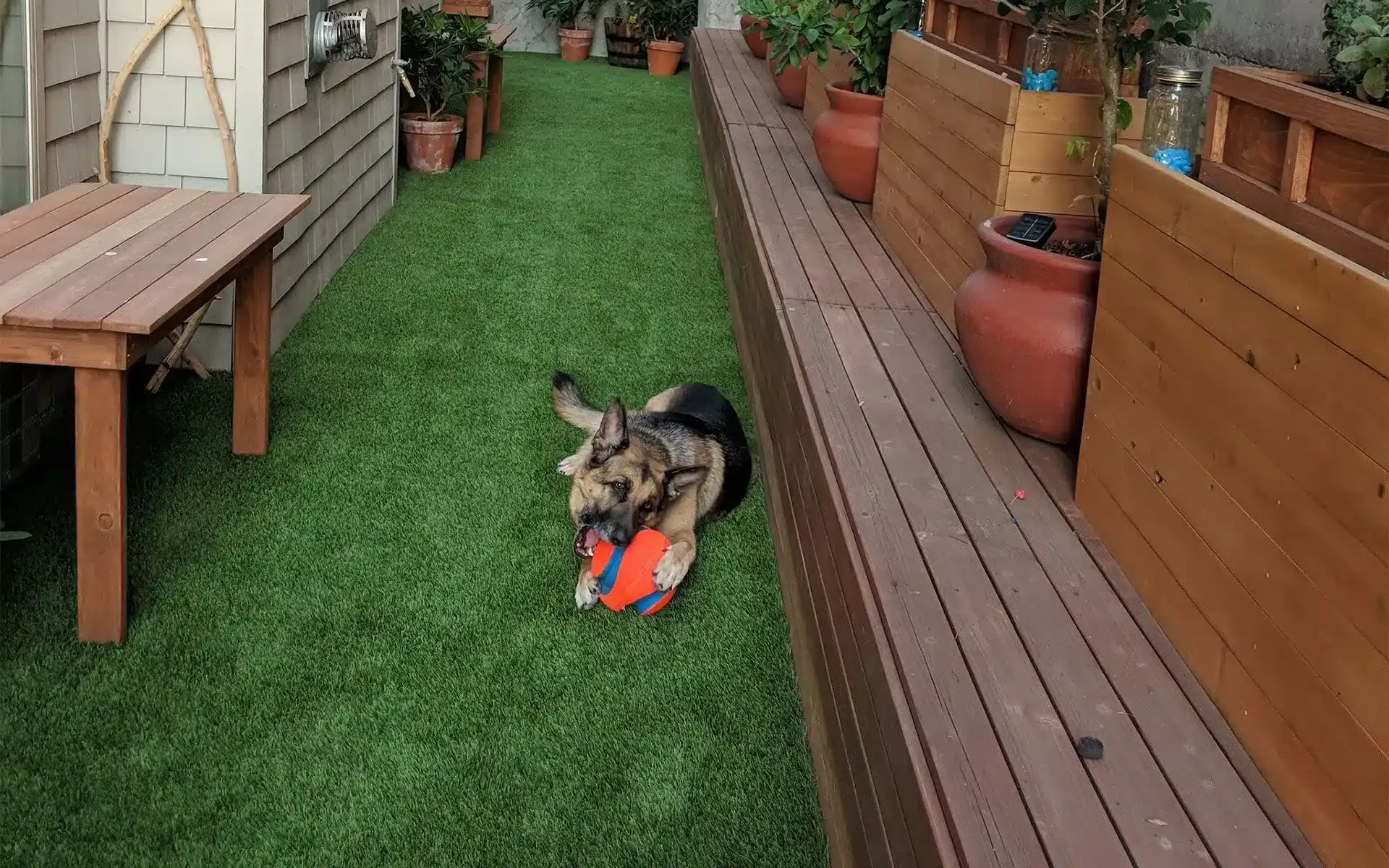
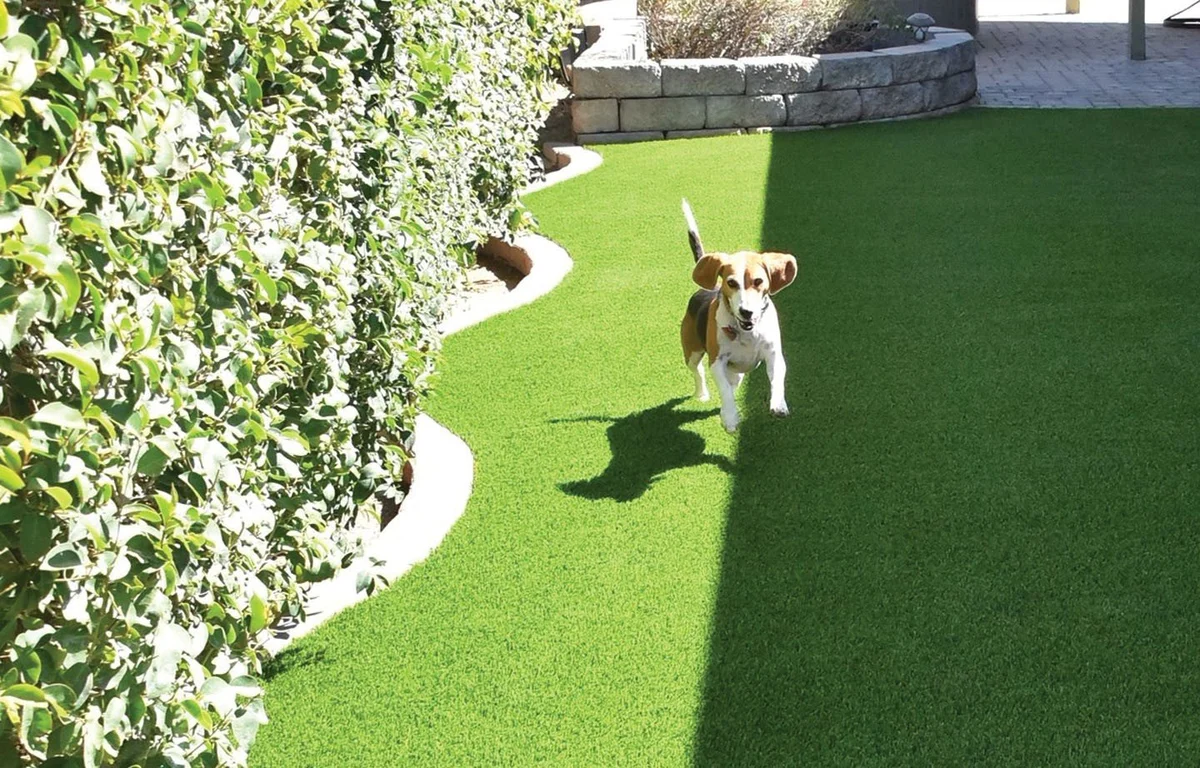
Pet turf installation in Missouri City has a specific engineering challenge that most general-purpose turf installations don't address adequately: the combination of Brazos bottomland clay drainage and the high-volume liquid load from dog runs and pet yards creates base saturation conditions that a standard drainage specification cannot handle. Missouri City's clay soil drains slowly under normal conditions. Add daily pet waste volume to a dog run on that clay, and the base becomes a retention reservoir that hosts odor problems, standing water, and drainage failures that owners notice within the first wet season. Artificial Turf of Missouri City designs pet turf installations around the Missouri City drainage reality. Pet-specific installations use a perforated drainage base with a steeper aggregate specification than standard landscape turf, perimeter routing that directs pet waste drainage toward the property's nearest outlet rather than allowing it to pool at the base of the run, and infill type that addresses odor management alongside drainage performance. The infill selection for a pet run in Quail Valley is not the same as the infill selection for a front yard landscape strip — antimicrobial properties, heat tolerance, and drainage flow characteristics all factor into pet-specific product selection. We also address the access constraints common on Missouri City residential lots: most dog runs are in side yards or back corners of the property, accessed through narrow gates, with utility lines or landscape obstructions overhead. Access planning happens before materials are delivered, and crew staging is coordinated so the installation day proceeds without improvised problem-solving at the gate or in the side yard. The result is a pet surface that drains predictably, manages odor through the product and drainage system rather than requiring chemical treatment, holds up under the repetitive traffic pattern of daily use, and stays functional through Fort Bend County's full seasonal cycle.