
Introduction
Missouri City turf projects require knowledge of local soil behavior, Brazos floodplain drainage patterns, and the grade transitions common on Quail Valley and Hunters Glen lots developed across multiple decades.
Loading content...
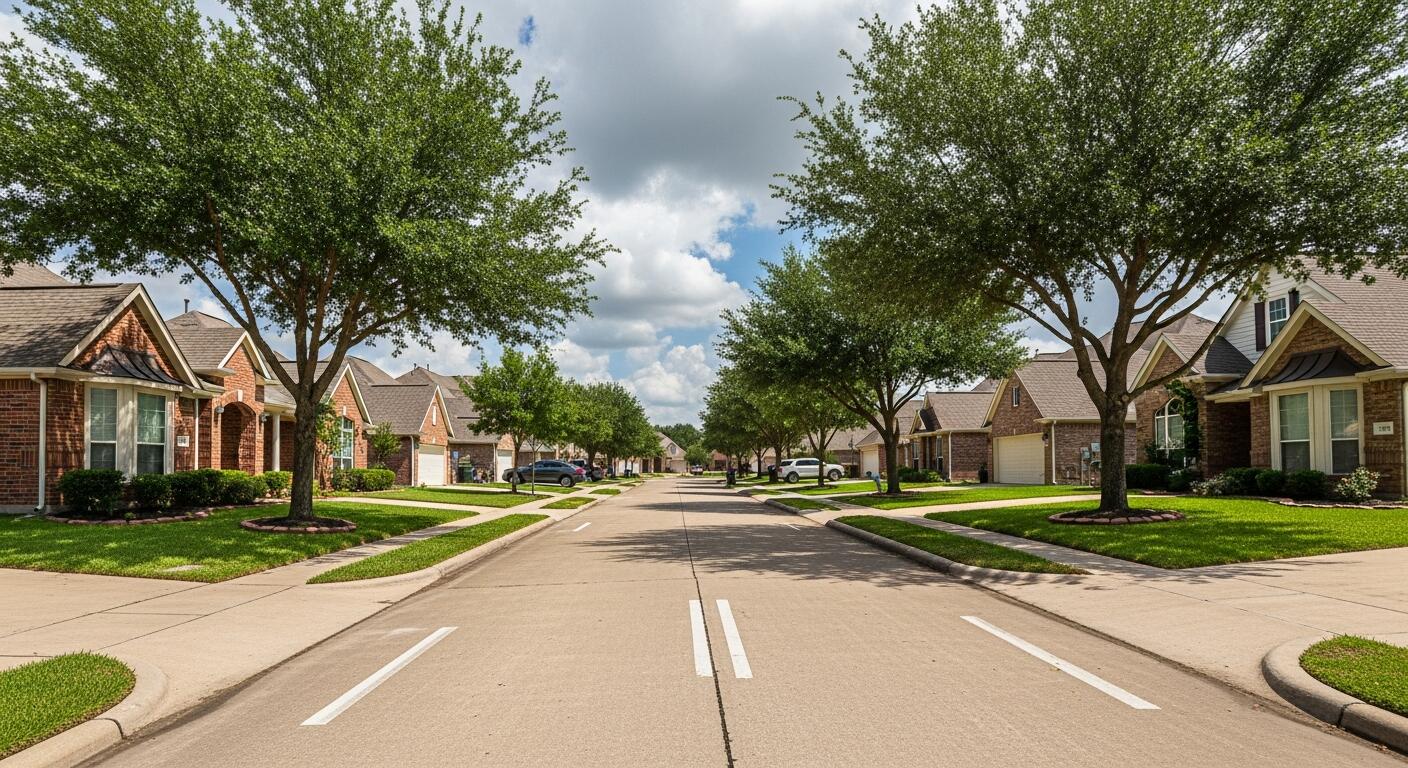
Quail Valley golf-course lots, Hunters Glen cul-de-sacs, and Fort Bend Toll Road commuter properties — turf that holds up to Fort Bend County weather year after year.
Missouri City is not a generic suburb. It's a city where Quail Valley homeowners mow around mature live oaks planted in the 1970s, where Hunters Glen backyards slope toward Steep Bank Creek tributaries, and where the Fort Bend Toll Road corridor means residents spend twenty minutes on FM 2234 before they're even close to the Beltway. That commute reality changes how homeowners think about yard maintenance. Coming home at 6:30 on a Wednesday evening, the last thing anyone wants is a dead patch near the back gate or a rut developing where the dog runs from the kitchen door to the fence line. Artificial Turf of Missouri City was built around that practical reality. We understand the Brazos bottomland clay that dominates lots west of Highway 6, the way standing water pools in Quail Valley after a thunderstorm before it slowly drains south, and the specific grade challenges that show up on older 1970s lots where original drainage was never designed for today's rainfall events. We plan every installation around actual site conditions — soil behavior, existing hardscape, grade transitions, and how rainfall moves across your specific property. Our approach to Missouri City projects starts with the Quail Valley and Hunters Glen neighborhoods at the core, then extends east to First Colony overlap properties, south to Lake Olympia and Steep Bank Village, and west along the Fort Bend Toll Road corridor toward Sugar Mill and the eastern Riverstone phases. Whether your property backs to a golf course fairway, borders a drainage easement near Steep Bank Creek, or sits on one of the larger lots in Olympia Estates, the installation detail that protects your investment is the same: a properly engineered base, a drainage layer that moves water predictably, and seams placed so they don't appear after the first summer heat cycle.
Missouri City turf projects require knowledge of local soil behavior, Brazos floodplain drainage patterns, and the grade transitions common on Quail Valley and Hunters Glen lots developed across multiple decades.
Brazos bottomland clay retains water long after a storm, older Quail Valley lots often drain toward shared easements rather than street curbs, and Fort Bend County summer heat accelerates edge lifting when base preparation is skipped or rushed.
We address clay retention with a properly vented aggregate base, route drainage away from foundation lines and fence posts, and use edge anchoring methods suited to Fort Bend's expansion-contraction soil cycle.
Homeowners gain a surface that holds its grade after Brazos-event rainfalls, stays presentable through the Quail Valley Country Club golf season, and reduces weekly maintenance to a simple rinse rather than a weekend project.
Each Missouri City project starts with a site walk to document grade, soil type, and drainage direction, followed by base engineering, turf installation with controlled seams, infill calibration, and a final walkthrough before we leave the property.
Missouri City coverage runs from Quail Valley and Hunters Glen through Lake Olympia, Olympia Estates, Steep Bank Village, First Colony eastern sections, and Sugar Mill, with route connections to Sugar Land, Stafford, Fresno, and Richmond.
Missouri City properties range from 1970s-era Quail Valley golf-course lots to newer Steep Bank Village homes with HOA exterior standards, each requiring a different installation approach.
Established lots with mature trees, uneven grade from decades of soil movement, and existing hardscape that needs clean turf transitions at every edge.
Larger lots near the lake with drainage considerations tied to seasonal water table shifts and the need for durable surface performance through wet and dry cycles.
Quail Valley Country Club corridor commercial properties and community common spaces where scheduling around occupancy and appearance standards matter.
Fort Bend County clay, Brazos bottomland drainage behavior, and the specific grade patterns of Quail Valley-era development shape every installation decision we make.
Missouri City soils west of Highway 6 are heavy Brazos bottomland clay that expands in wet seasons and contracts in drought, creating base instability if aggregate depth and compaction are not planned for these conditions.
Many Hunters Glen and Steep Bank Village lots have drainage easement boundaries that affect turf placement, seam location, and perimeter anchoring — we map these before cutting any material.
Homeowners with Highway 6 and Fort Bend Toll Road commutes need installation schedules that minimize weekday disruption and deliver a finished surface before the weekend, not a week of half-finished work.
From Quail Valley homeowners managing golf-course-adjacent lots to commercial operators along the Highway 6 and Fort Bend Toll Road corridor, we adapt our approach to match property type and timeline.
Quail Valley, Hunters Glen, and Lake Olympia residents who want their yard to look right without spending Saturday mornings on it — we build surfaces that hold up through Fort Bend's full weather cycle.
Common areas and entry landscapes in Quail Valley and Steep Bank Village that need consistent appearance with scheduled installation windows that respect community access rules.
Highway 6 and Fort Bend Toll Road corridor commercial properties where durability, drainage, and scheduled installation around operating hours are the priorities.
We plan Missouri City installations around Fort Bend County weather windows, homeowner commute schedules, and HOA access rules. Most Quail Valley and Hunters Glen residential projects are completed within a defined scope window so the yard is functional before the next weekend. We communicate directly with the property contact at each milestone.
Missouri City primary service area covers Quail Valley, Hunters Glen, Steep Bank Village, Lake Olympia, Olympia Estates, Sugar Mill eastern sections, and First Colony eastern overlap, with route connections to Sugar Land, Stafford, Fresno, Richmond, and the Fort Bend Toll Road corridor.
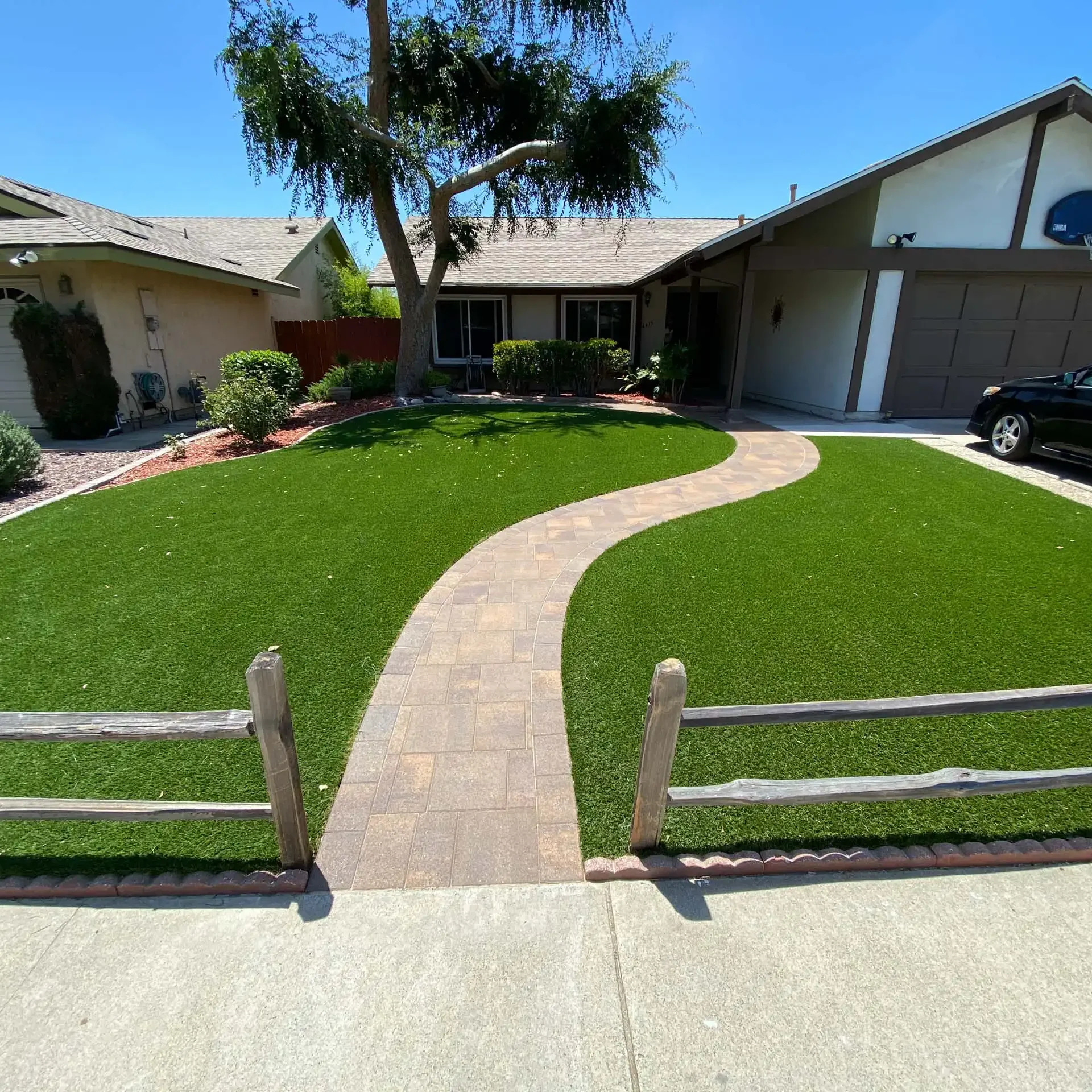
Full artificial turf installation for Missouri City residential and commercial properties, engineered for Brazos bottomland clay and Fort Bend County heat cycles.
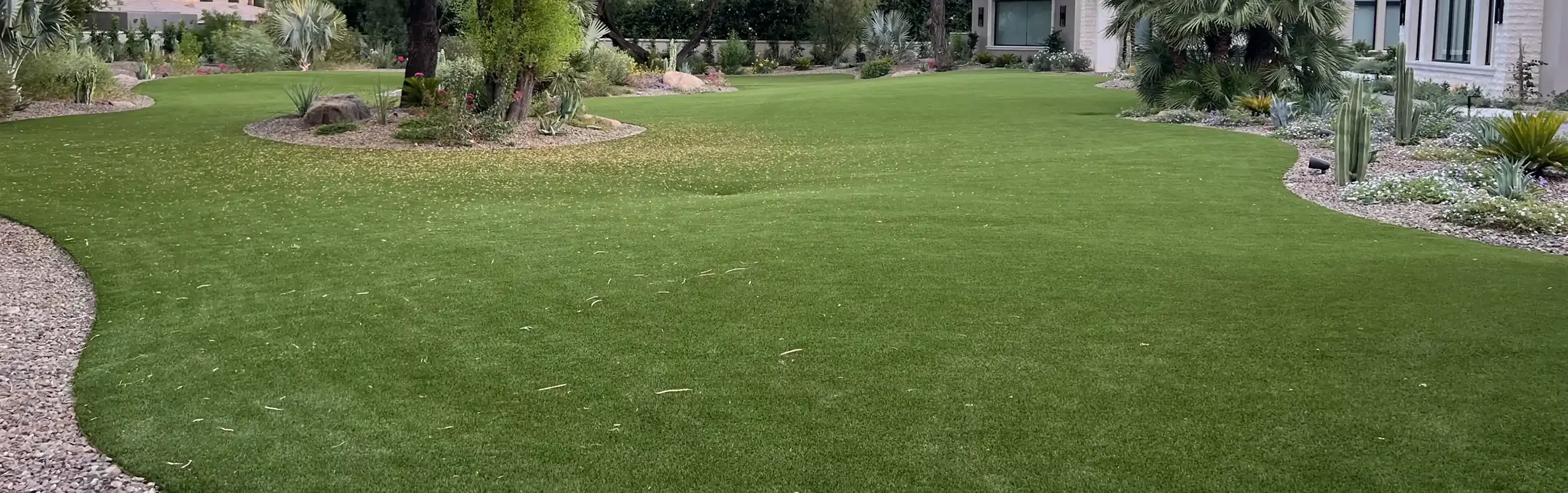
Backyard and front yard turf for Quail Valley, Hunters Glen, Lake Olympia, and other Missouri City neighborhoods.
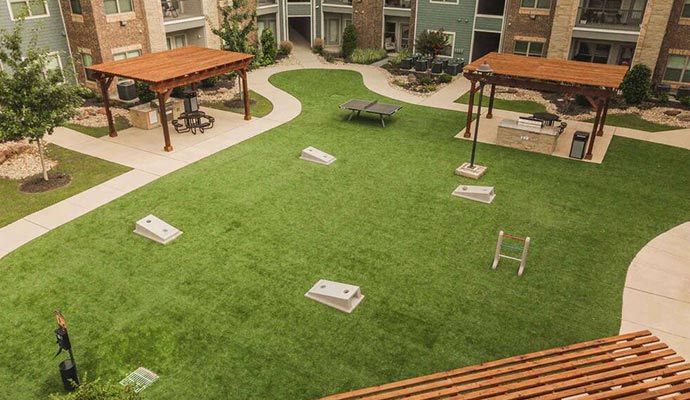
Commercial turf installation for Missouri City properties along Highway 6 and the Fort Bend Toll Road corridor.
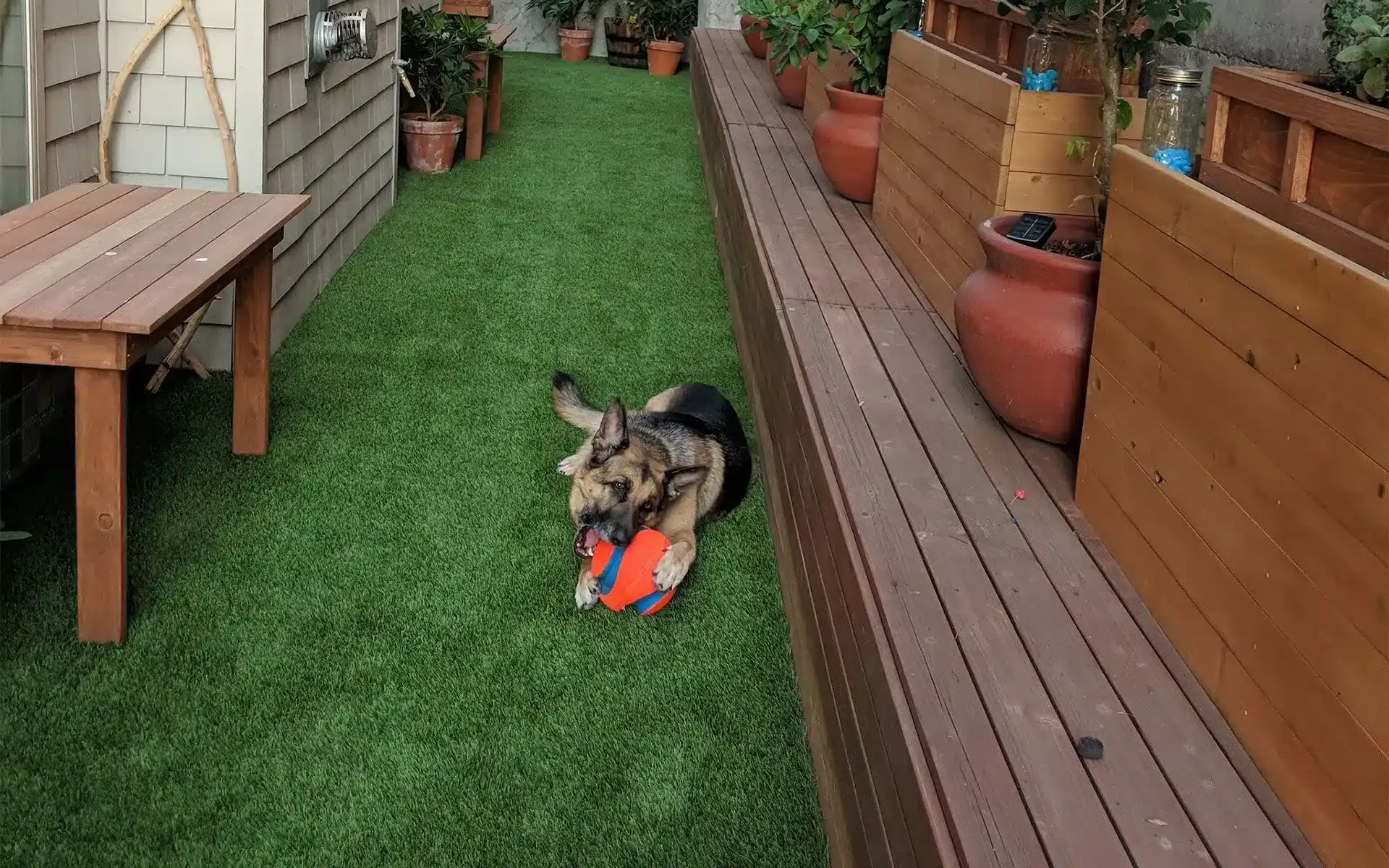
Pet-specific turf for Missouri City homes with drainage engineered for Fort Bend County's clay soil and heavy rain events.
Custom putting greens for Missouri City homeowners near Quail Valley Country Club and throughout the golf-course community corridor.
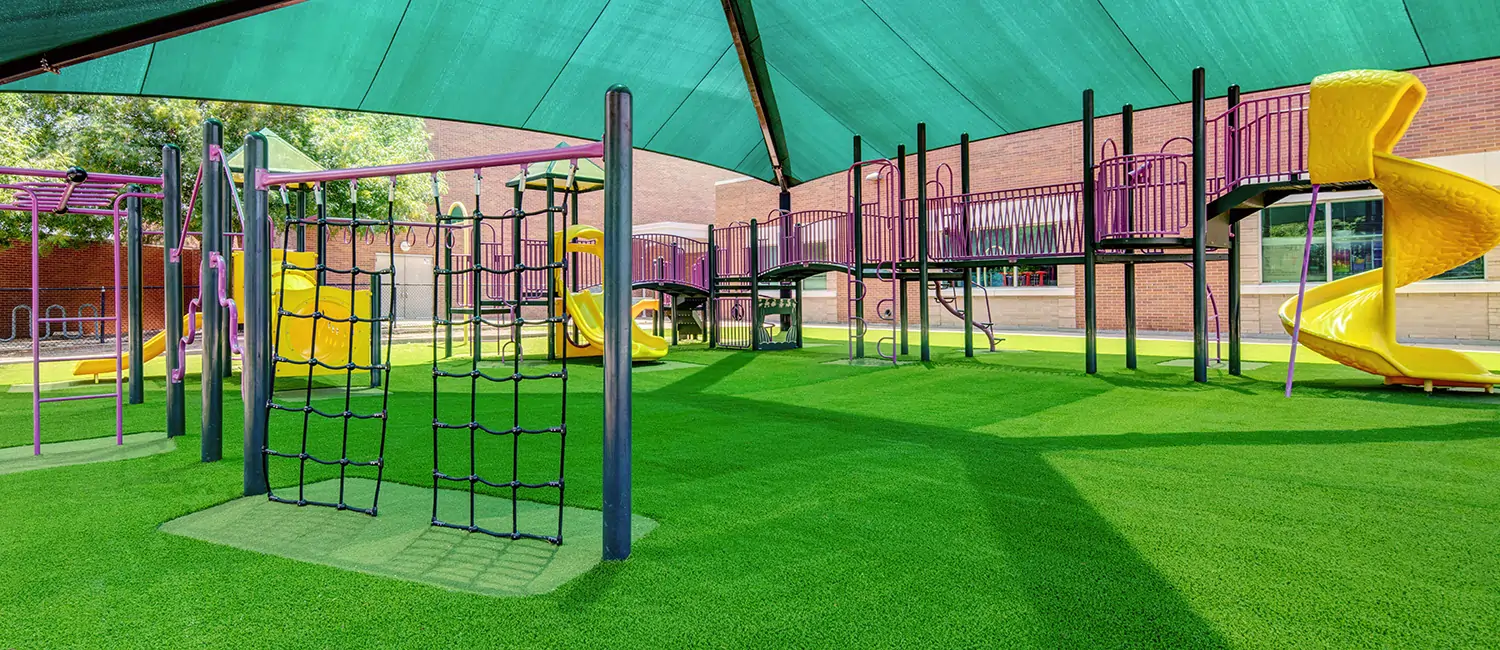
Safe-surface playground turf for Missouri City residential yards and community play areas.
Yes. Brazos bottomland clay in Missouri City expands and contracts significantly with seasonal moisture changes. We use a deeper aggregate base with proper compaction and venting to prevent the surface from lifting or developing low spots after heavy Brazos-corridor rain events.
Absolutely. We plan most Missouri City residential installations to minimize weekday disruption and aim to complete the core installation work so the yard is usable before the following weekend.
We review drainage easement boundaries before cutting any material. Turf placement, seam locations, and perimeter anchoring are planned to stay within property boundaries and maintain proper water flow through easement corridors.
Yes. We have completed putting green installations in the Quail Valley golf course corridor and can match grade contours to match a homeowner's practice preferences.
Most standard residential projects in Missouri City run two to four days from base preparation through final grooming, depending on square footage, site access, and grade complexity.
Send project details and timeline information to get route scheduling options for this location.
Call