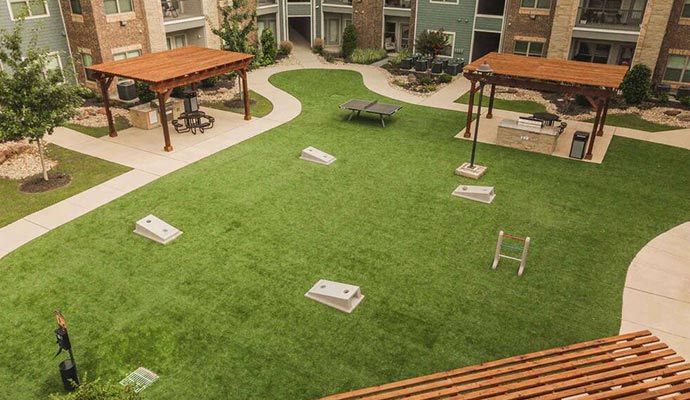
Commercial turf installation in Missouri City and the Fort Bend Toll Road corridor requires a different operational approach than residential work. Commercial properties along Highway 6, the Fort Bend Toll Road service roads, the Dulles commercial district, and the US-59 corridor in Sugar Land and Stafford are open-access locations where installation cannot simply halt normal business operations for a week while work proceeds. The scheduling discipline required for commercial installations is not just about convenience — it is about protecting the commercial relationship between the property owner and their tenants, the commercial property's curb appeal during installation, and the efficiency of the installation crew's time on a property where access and staging are governed by business operating patterns. Artificial Turf of Missouri City approaches commercial installations with a pre-planned operations framework. Before a crew arrives on-site, we have documented the operating hours of every tenant affected by the installation, identified staging areas that do not interfere with customer parking or building entry access, established phased completion zones that allow areas of the property to return to full commercial use while other zones are still under construction, and confirmed the point-of-contact escalation path if unexpected conditions require scope modification during installation. The base engineering principles are the same as residential — Fort Bend clay requires engineered aggregate depth, drainage routing matters, and seam quality is a finished-product priority — but the project management framework around a commercial installation has to account for the reality that the parking lot does not close because we need it.